Updated October 2026 · About a 12-minute read
New Orleans is unlike any other city in North America. It mixes French, Spanish, African and Caribbean roots into its own food, music and architecture, and it celebrates almost everything with a parade. You can eat beignets in a 19th-century square, ride the world’s oldest operating streetcar line under live oaks, hear brass bands on a weeknight and walk a boardwalk through a cypress swamp, all in one trip. This guide covers when to go, how to get around, where to stay, the best neighbourhoods, things to do, day trips, food and nightlife, the big festivals, sample itineraries and the do’s and don’ts first-timers miss.
Best time to visit New Orleans
The short answer: February to May and October to early December give you the most comfortable weather and the best festival calendar. Summer is cheaper but hot, humid and stormy.
- Winter (December to February): mild and sometimes damp, with January averaging highs around 64°F (18°C) and lows around 45°F (7°C). The humidity makes cool days feel colder, so pack layers. Carnival season starts on January 6 and builds to Mardi Gras.
- Spring (March to May): one of the prettiest times of year, with temperatures from the low 50s to the upper 70s°F (about 10 to 26°C). April and May have the fewest rainy days. This is also peak festival season, so book early.
- Summer (June to August): hot and humid, with July and August averaging highs of about 92°F (33°C). Short, heavy afternoon storms are common. Hotel prices are usually at their lowest.
- Fall (September to November): early September is still hot, but by November temperatures drop to the upper 70s to mid-50s°F. Fall is the busiest season for festivals, football and events.
- Hurricane season: the Atlantic season runs from June 1 to November 30. In the New Orleans area, most hurricanes over the past century arrived between late July and September.
Getting there and getting around
Airport
Louis Armstrong New Orleans International Airport (MSY) is about 15 miles west of downtown, roughly a 20-minute drive without traffic. It has nonstop flights from most major North American cities.
- Taxi: a flat fare of US$36 for up to two passengers to the Central Business District or the French Quarter, or US$15 per person for three or more.
- Bus: the RTA Airport Express (route 202) runs to downtown for US$1.25 and stops at Elk Place and the Union Passenger Terminal. Buses leave from Level 1, Baggage Claim, outside Door 2.
- Rideshare: Uber and Lyft both serve the airport and are often similar in price to a taxi for two people.
Getting around the city
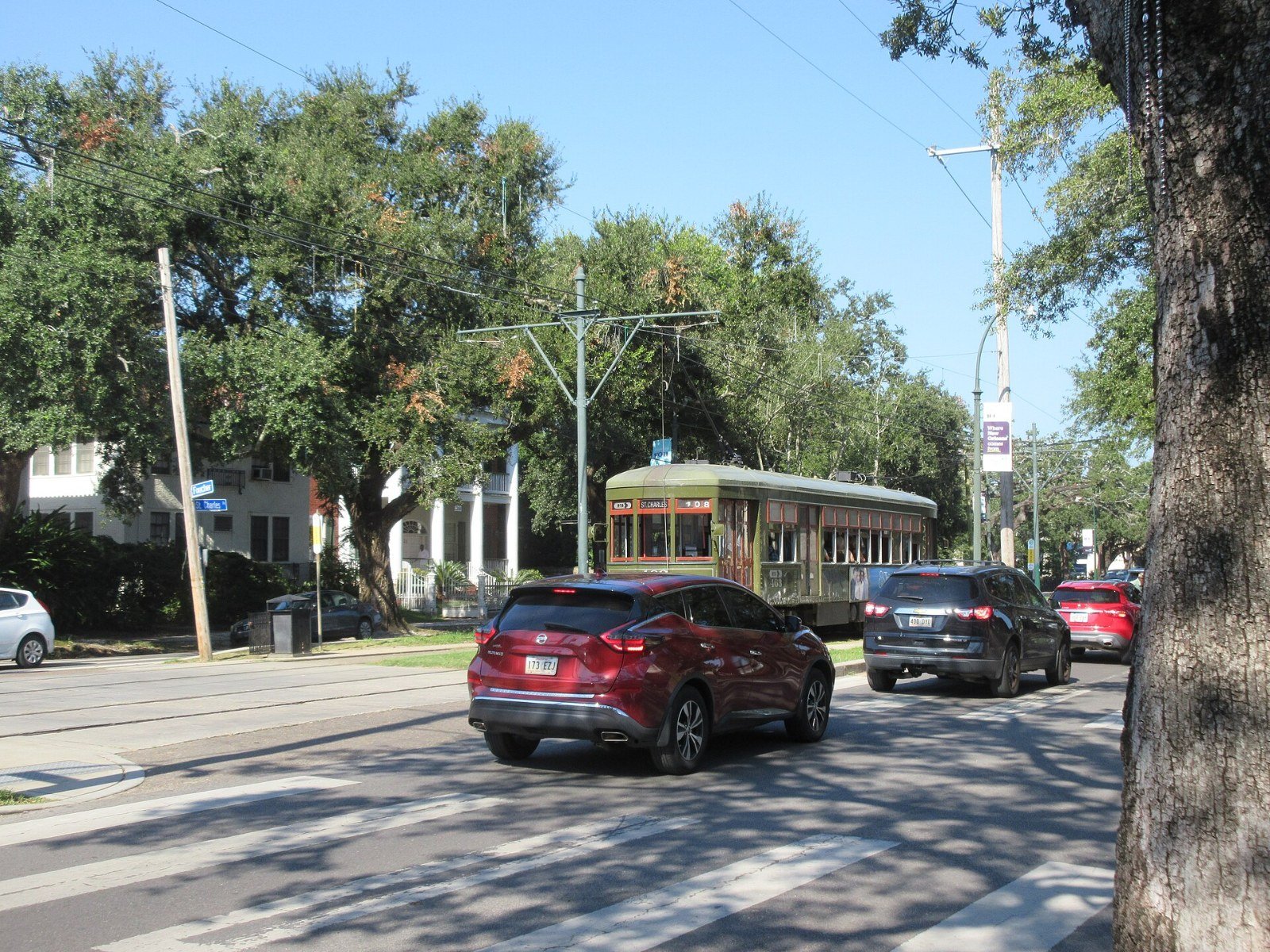
The French Quarter, the Marigny, the Central Business District and the Warehouse District are all walkable. For longer trips, use the streetcars. The St. Charles line, which opened in 1835, is described as the oldest continuously operating streetcar line in the world. It runs about six miles from Canal Street through the Garden District to Uptown and Carrollton. The Canal Street line goes to City Park, and the Riverfront and Rampart lines circle the Quarter.
A single RTA bus or streetcar ride costs US$1.25. A Jazzy Pass gives unlimited rides for US$3 for one day or US$9 for three days. You do not need a car for a city-only trip, and parking in the French Quarter is expensive and limited. Rent one only for plantations or a longer road trip.
Where to stay in New Orleans
- French Quarter: the classic choice for first-timers. You can walk to Jackson Square, the riverfront and most famous restaurants. Pick a hotel a few blocks away from Bourbon Street if you want to sleep.
- Central Business District (CBD) and Warehouse District: large hotels, rooftop bars, art galleries and the National WWII Museum, a short walk from the Quarter. Often better value than the Quarter itself.
- Faubourg Marigny: just downriver of the Quarter and home to Frenchmen Street. Smaller inns and guesthouses, and the best live music on your doorstep.
- Garden District and Lower Garden District: quieter and residential, with grand historic homes and boutique bed-and-breakfasts. Good for repeat visitors who want a slower pace and easy streetcar access.
- Uptown: leafy streets, Audubon Park and Magazine Street shopping. Best for longer stays and families.
Top neighbourhoods to explore
French Quarter (Vieux Carré)
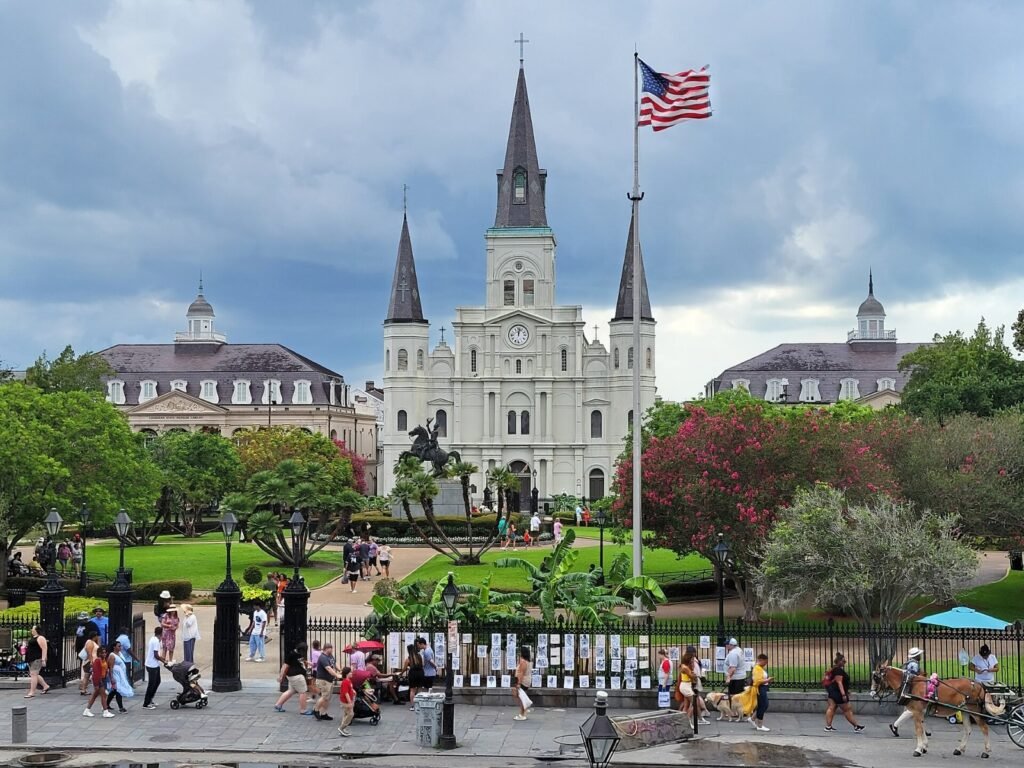
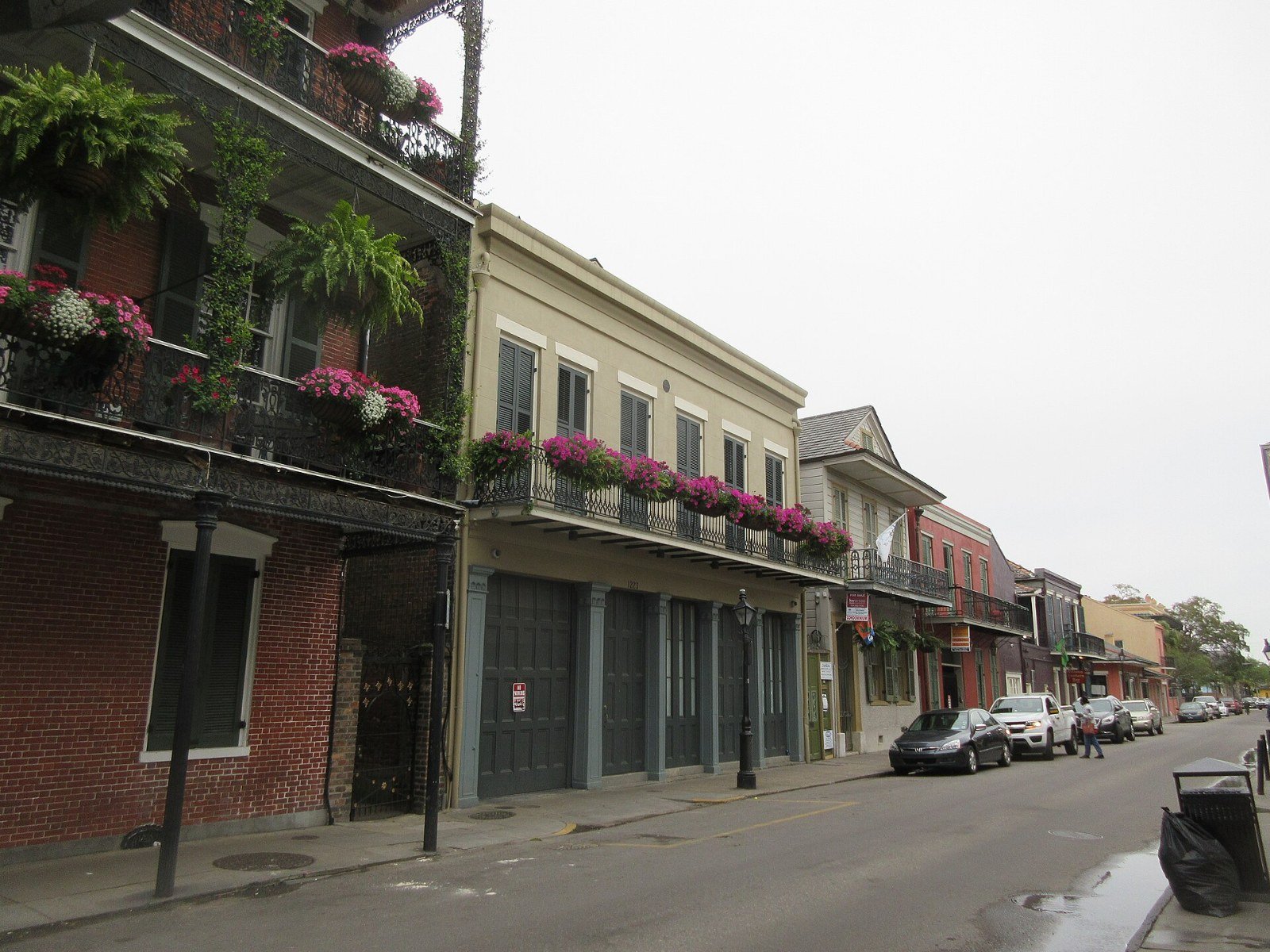
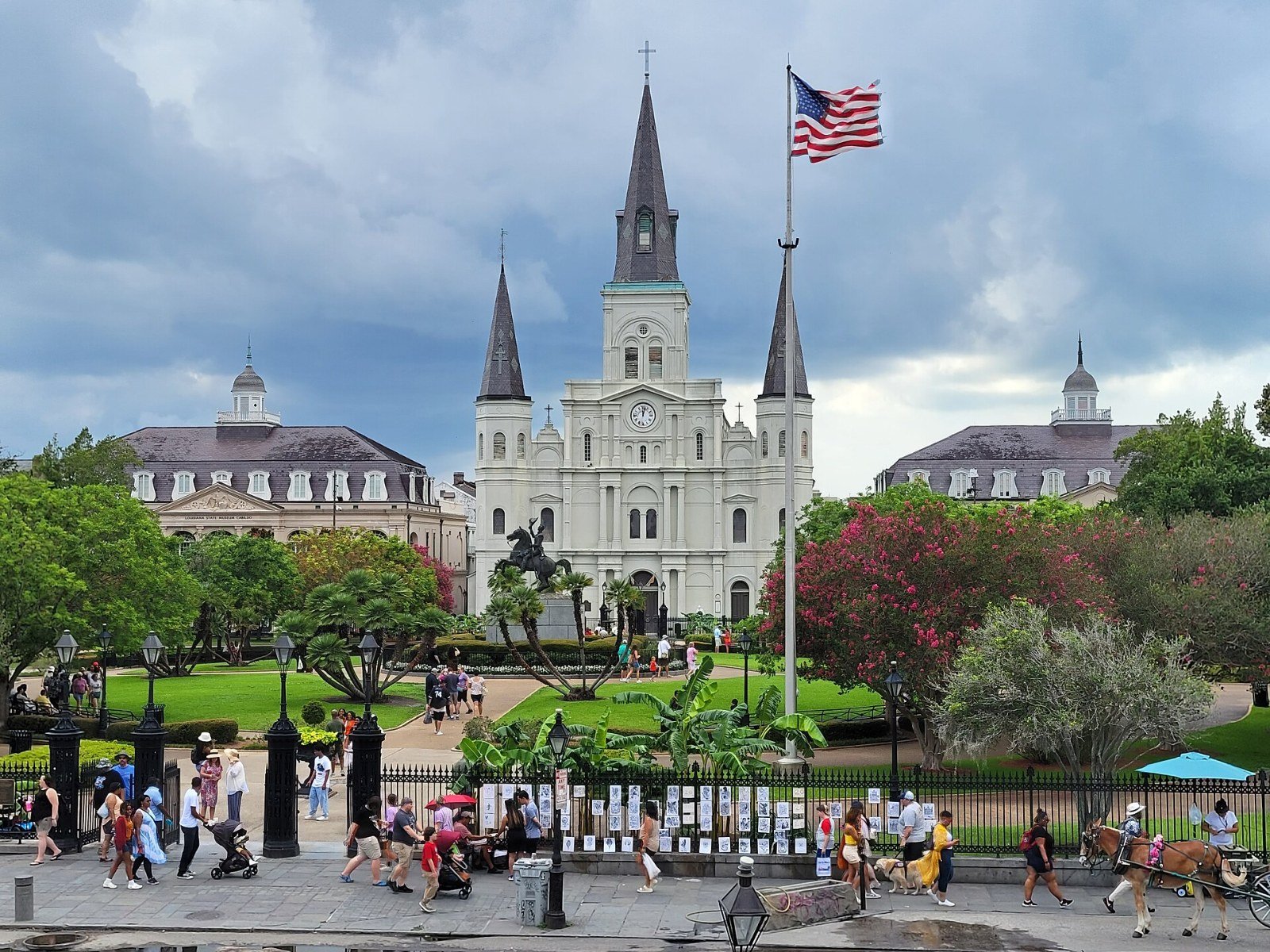
The oldest part of the city, laid out in a tight grid by the river. Its Spanish-era buildings, iron-lace balconies and courtyards make it one of the most photographed districts in the U.S. Jackson Square, with St. Louis Cathedral, the Cabildo and the Presbytère, is its heart. Royal Street is known for galleries, antiques and street musicians, while Bourbon Street is the loud, neon party strip.
Faubourg Marigny and Bywater
Frenchmen Street in the Marigny has clubs side by side with live jazz, blues and brass bands most nights. Further downriver, the Bywater has colourful shotgun houses, street art and Crescent Park along the Mississippi.
Garden District
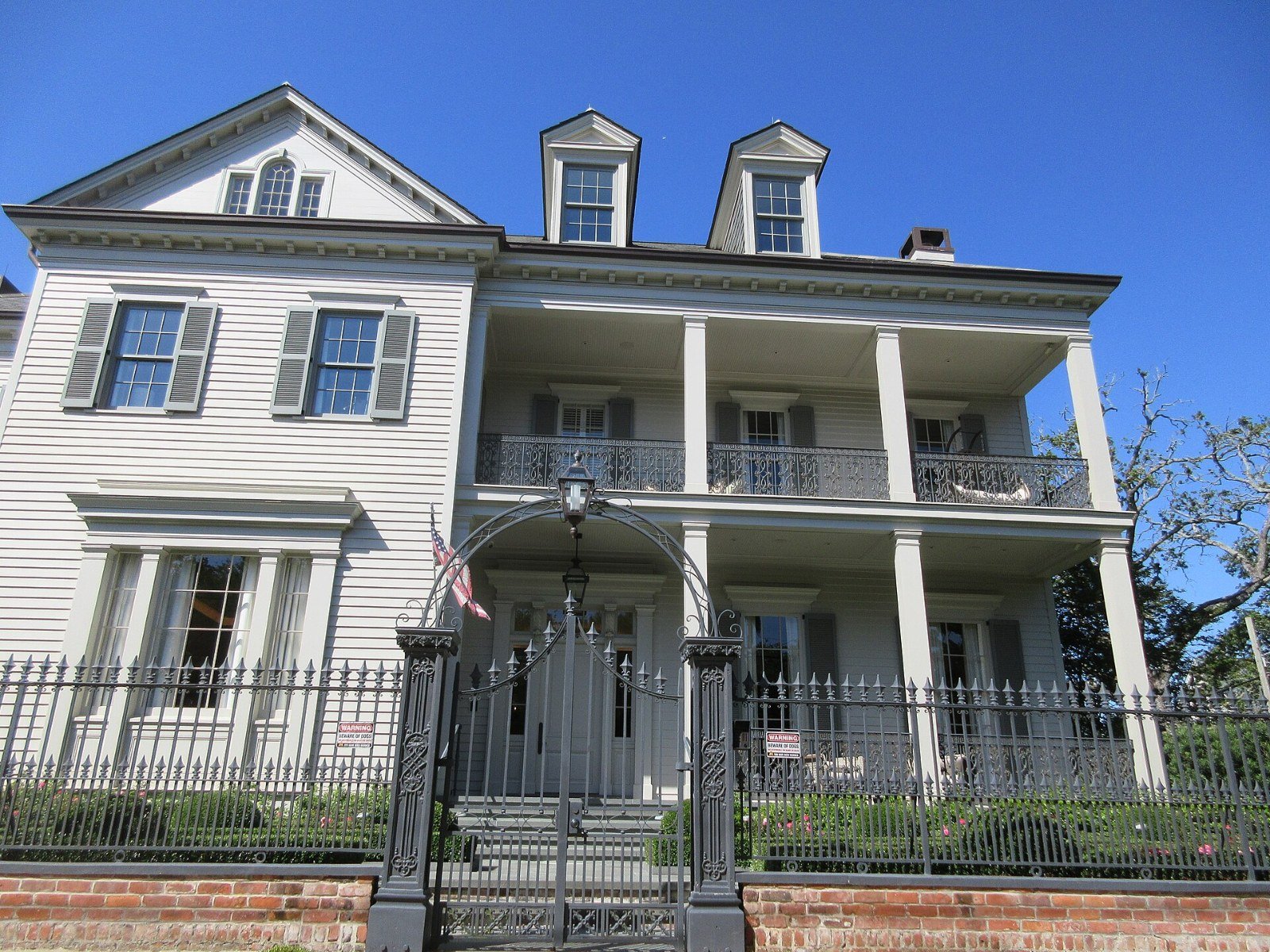
Built by wealthy Americans in the 1800s, the Garden District is famous for its mansions, gardens and oak-lined streets. Walk the area around Prytania Street and Washington Avenue, then continue to Magazine Street for shops and cafés.
Tremé
One of the oldest African American neighbourhoods in the U.S. and a cradle of jazz and brass band culture. Visit Louis Armstrong Park, which includes Congo Square, a historic gathering place for music and dance.
Top things to do in New Orleans
- Jackson Square and St. Louis Cathedral: watch the artists and street performers, then step inside the cathedral and walk along the riverfront Moonwalk.
- Beignets at Café du Monde: the French Market stand is the famous one, and the brand also runs a café in City Park.
- The National WWII Museum: a large, highly rated museum in the Warehouse District. Allow at least half a day.
- Ride the St. Charles streetcar from Canal Street to the Garden District and Audubon Park.
- Live music on Frenchmen Street: many clubs have no cover or a small one, and you can hop between bands all evening. For traditional jazz, see a set at Preservation Hall.
- City Park: about 1,300 acres, roughly 50% larger than Central Park in New York. It holds one of the world’s largest collections of mature live oaks, some more than 600 years old, plus the New Orleans Museum of Art, the free Sydney and Walda Besthoff Sculpture Garden and the Botanical Garden.
- Cemetery tour: New Orleans buries its dead in above-ground tombs. St. Louis Cemetery No. 1, where Voodoo priestess Marie Laveau is believed to be buried, can only be visited with a licensed tour guide.
- Mississippi River: take a paddlewheeler cruise or the Algiers ferry for skyline views.
- Mardi Gras World: see how the giant parade floats are built if you are not visiting during Carnival.
Nature and day trips
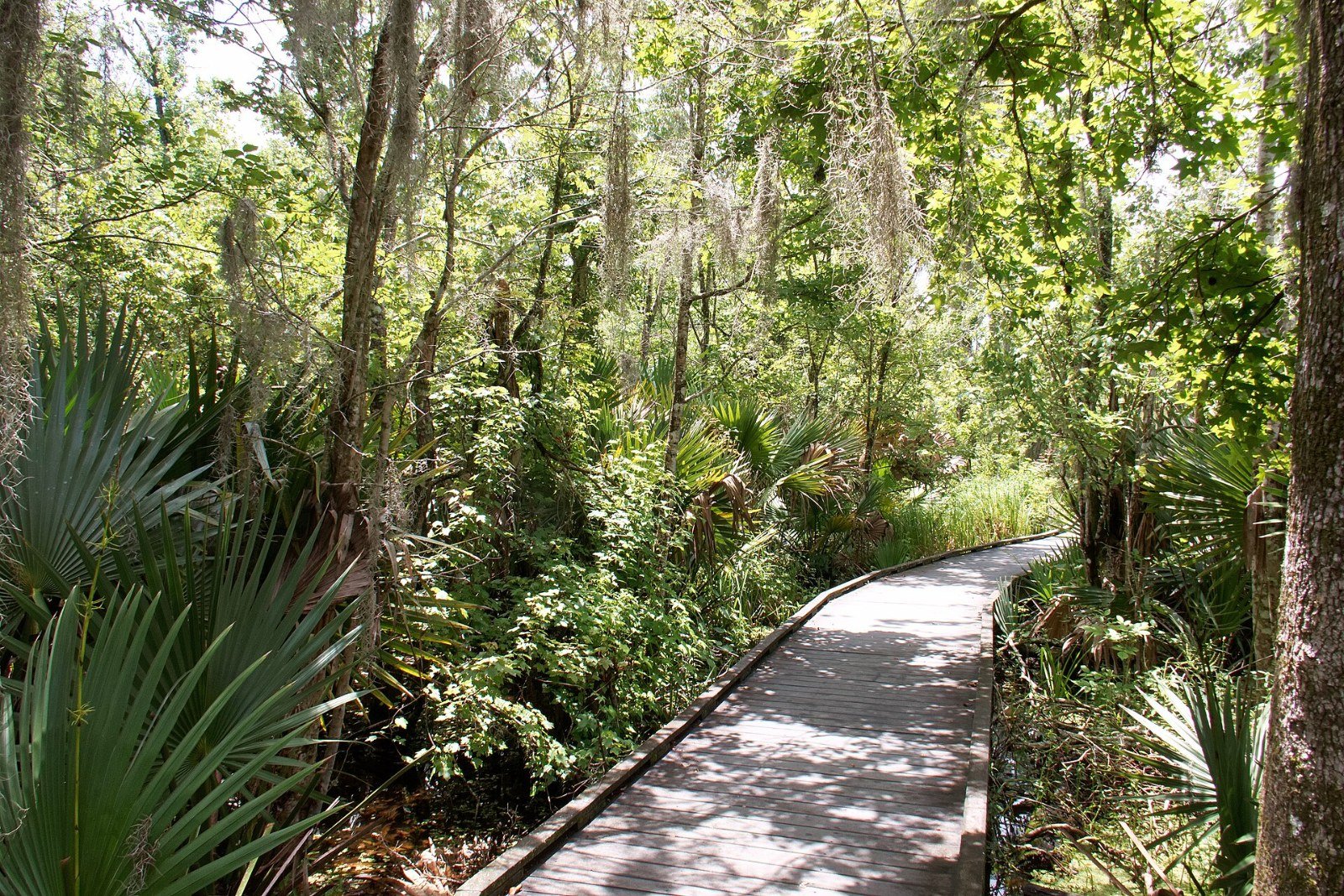
- Barataria Preserve (Jean Lafitte National Historical Park and Preserve): about 23,000 acres of swamp, marsh and bayou in Marrero, roughly a 30-minute drive from downtown. Boardwalk trails take you through cypress and tupelo swamp, and you may see alligators, turtles and herons.
- Swamp and bayou boat tours: several operators run small-boat tours from just outside the city, many with hotel pick-up.
- River Road plantations: the historic plantations along the Mississippi between New Orleans and Baton Rouge. Whitney Plantation focuses on the lives of enslaved people, and Oak Alley is known for its avenue of live oaks.
- Audubon Zoo and Audubon Park: an easy half day in Uptown, reached by the St. Charles streetcar.
- Bay St. Louis and the Mississippi Gulf Coast: about an hour’s drive east for small-town beaches and seafood.
Shopping
- Magazine Street: about six miles of independent boutiques, vintage shops, galleries and cafés between the Lower Garden District and Uptown.
- Royal Street: fine antiques, jewellery and art galleries in the French Quarter.
- French Market: a historic market by the river with food stalls and a flea market for souvenirs, hot sauce and local crafts.
- Canal Place and the Outlet Collection at Riverwalk: the main malls downtown, with brand names and outlet stores.
- What to bring home: pralines, chicory coffee, Cajun spice blends, hot sauce, Mardi Gras masks and local art.
Food, nightlife and entertainment
Food is the main reason many people visit. Creole cooking is the city’s own mix of French, Spanish, African and Caribbean influences, while Cajun food comes from the rural French-speaking communities of south Louisiana.
- Dishes to try: gumbo, jambalaya, red beans and rice, shrimp and grits, a po’boy sandwich, a muffuletta, crawfish (in season, roughly late winter to early summer), char-grilled oysters, bread pudding and pralines.
- Classic dining rooms: Antoine’s, Galatoire’s, Arnaud’s and Commander’s Palace are long-standing names for a dressed-up Creole dinner. Many have a dress code, so check before you go.
- Brunch is a local tradition, often with a live jazz trio.
- Cocktails: the Sazerac and the Hurricane are both tied to New Orleans. Try a hotel bar classic, or a rooftop bar in the CBD.
- Nightlife: Frenchmen Street for live music, Bourbon Street for a loud party night, and Uptown clubs like Tipitina’s for bigger shows.
Big annual events
- Carnival and Mardi Gras: the season begins on January 6 (Twelfth Night). In 2027, Lundi Gras is February 8 and Mardi Gras Day is Tuesday, February 9. The biggest parades run in the final week, including the super krewes Endymion (Saturday), Bacchus (Sunday) and Orpheus (Monday), and Zulu and Rex on Mardi Gras morning. Parades are free to watch.
- French Quarter Festival: a free music festival on stages across the French Quarter, usually on the second weekend of April. Listings give April 8 to 11 for 2027.
- New Orleans Jazz and Heritage Festival (Jazz Fest): held over two long weekends in late April and early May at the Fair Grounds Race Course. Check the official site for the 2027 dates and line-up before you book.
- Essence Festival of Culture: held every year over the Fourth of July weekend at the Caesars Superdome and venues around the city.
- Halloween: costumes and parades, especially in the French Quarter and the Marigny.
- Holiday season: City Park lights up its live oaks for its holiday light show, and many restaurants serve traditional Réveillon dinners in December.
Sample New Orleans itineraries
3 days in New Orleans
- Day 1 – French Quarter: beignets in the morning, then Jackson Square, St. Louis Cathedral and the riverfront. After lunch, browse Royal Street and the French Market. In the evening, take a ghost or history walking tour and finish with a stroll down Bourbon Street.
- Day 2 – Museums and music: spend the morning at the National WWII Museum. In the afternoon, explore the Warehouse District galleries or take a river cruise. At night, have dinner in the Marigny and hop between clubs on Frenchmen Street.
- Day 3 – Garden District and Uptown: ride the St. Charles streetcar to the Garden District, walk among the mansions, then shop and eat along Magazine Street. End with a classic Creole dinner.
7 days in New Orleans
- Days 1 to 3: follow the 3-day plan above.
- Day 4 – City Park and Mid-City: visit the New Orleans Museum of Art and the sculpture garden, walk under the old oaks and have coffee and beignets in the park.
- Day 5 – Swamp day: take a morning swamp boat tour or walk the Barataria Preserve boardwalks, then return for a relaxed evening and a cocktail bar.
- Day 6 – River Road: rent a car or join a tour to Whitney Plantation and Oak Alley, and stop for Cajun food on the way back.
- Day 7 – Tremé and Bywater: visit Louis Armstrong Park and Congo Square, walk through the Bywater’s street art and Crescent Park, and end with a jazz brunch or a final night of live music.
New Orleans do’s and don’ts
Do
- Book hotels early for Mardi Gras, French Quarter Fest, Jazz Fest and big sports weekends.
- Use the streetcars and a Jazzy Pass to save on taxis and parking.
- Carry some cash and small bills for tips, street musicians and parade-day food stands.
- Drink plenty of water and wear sunscreen, especially from May to September.
- Take a licensed guide for St. Louis Cemetery No. 1.
- Bring comfortable, closed-toe shoes for uneven sidewalks and parade crowds.
Don’t
- Don’t carry glass on the street; use a plastic go-cup.
- Don’t walk alone on empty, poorly lit streets late at night; stay in busy areas or take a rideshare.
- Don’t touch or mark historic tombs, and don’t climb on monuments.
- Don’t block the parade route with ladders close to the curb; keep them well back.
- Don’t assume Bourbon Street is all there is; the best music is usually on Frenchmen Street.
- Don’t leave valuables visible in a parked car.
New Orleans FAQ
How many days do you need in New Orleans?
Three days is enough to see the French Quarter, the Garden District, a museum and Frenchmen Street. Five to seven days lets you add City Park, a swamp tour and a plantation visit without rushing.
Do I need a car in New Orleans?
No, not for the city itself. The main areas are walkable and connected by streetcars, buses and rideshare. A car is only useful for plantations, longer swamp trips or the Gulf Coast.
When is Mardi Gras 2027?
Mardi Gras Day is Tuesday, February 9, 2027. Carnival season starts on January 6, and the biggest parades take place in the last week before Mardi Gras.
Is New Orleans good for families?
Yes. City Park, the Audubon Zoo, the aquarium, streetcar rides, swamp tours and daytime parades are all family-friendly. Stay outside the Bourbon Street area for a quieter night.
What is the cheapest time to visit New Orleans?
Summer, from June to August, usually has the lowest hotel prices because of the heat and humidity. Early December and January, outside of holidays and big events, can also be good value.
What food should I try first?
Start with beignets, a po’boy, gumbo and red beans and rice. If you are visiting in crawfish season, try a boiled crawfish platter.
Planning a trip to New Orleans?
We track flight, hotel and package prices and only post deals that beat the usual price. See what’s live right now.
See New Orleans deals