
Updated November 2026 · About a 12-minute read
Cancun is a long, thin strip of white sand with the Caribbean on one side and a lagoon on the other, plus a working Mexican city a few kilometres inland. It is the easiest beach escape in Mexico to reach, and it puts Maya ruins, cenotes and Isla Mujeres within a day trip. This guide covers when to go, how to get around, where to stay, the best beaches, what to do, day trips, food, events and two ready-made itineraries.
Best time to visit
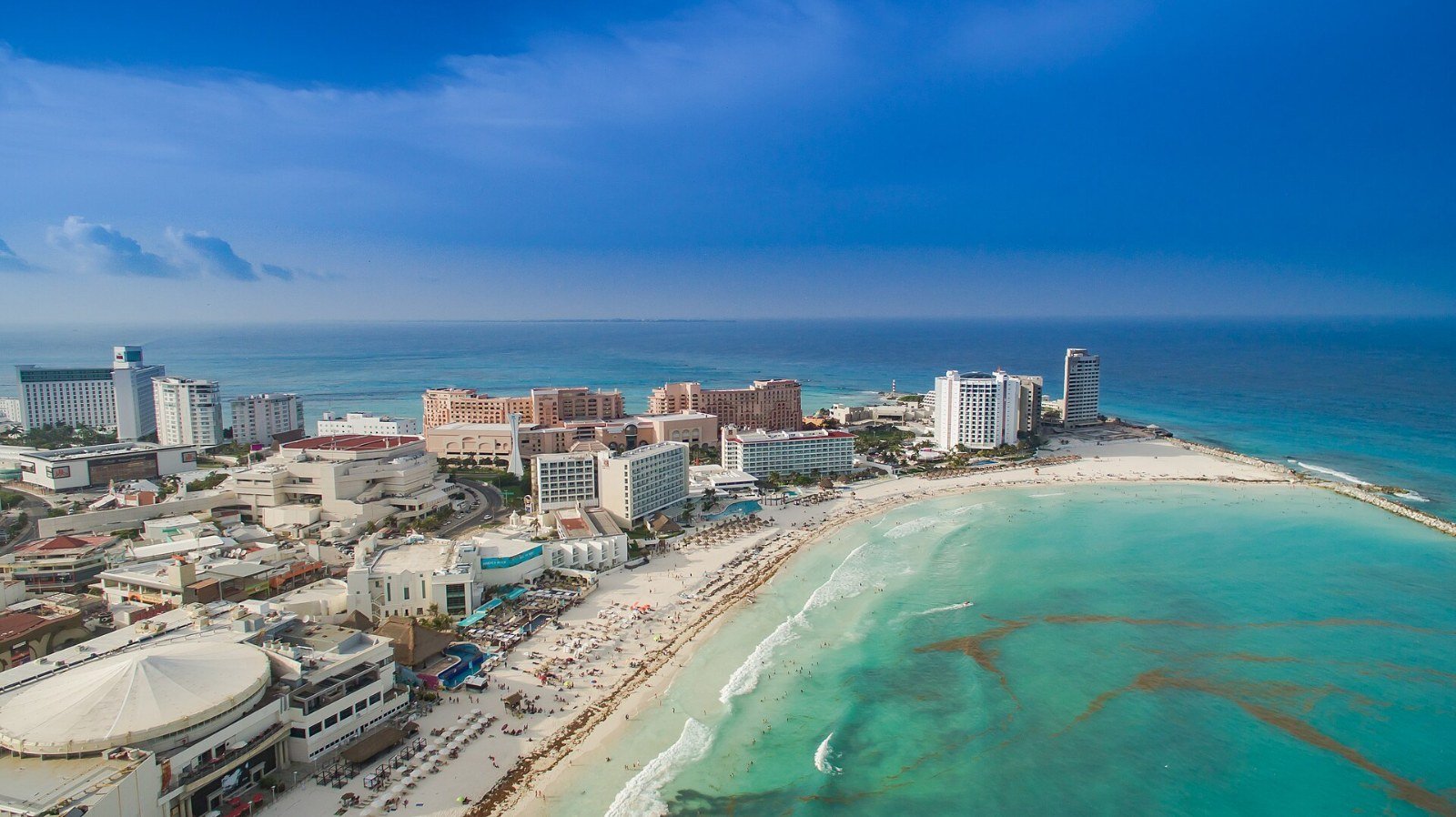
The dry season runs from about December to April, and it is the best time for most visitors. Days are sunny and warm, humidity is lower and the sea is usually calm and clear. It is also high season, so prices peak over Christmas and New Year, in February and around spring break in March.
May is hot and still fairly dry. From June the air gets heavier and short, heavy afternoon showers become common. The Atlantic hurricane season officially runs from June 1 to November 30, with the highest risk usually from August to October. Direct hits are not common, but if you travel in those months, book refundable rates and buy travel insurance.
Seaweed is the other thing to plan around. Sargassum drifts onto the Caribbean coast in varying amounts each year, usually most heavily between spring and late summer. Beaches facing the open sea are hit hardest; the north-facing beaches of the Hotel Zone and Isla Mujeres are often clearer.
Getting there and getting around
Cancun International Airport (CUN) is one of the busiest in Latin America, with nonstop flights from many cities in Canada, the United States and Europe. It sits about 20 minutes south of the Hotel Zone by car. Check which terminal your airline uses before you fly; the airport has several and they are not all connected inside.
From the airport you can take a pre-booked shuttle, an official airport taxi or the ADO coach, which runs to downtown Cancun and to Playa del Carmen. Many all-inclusive resorts sell transfers too. Agree taxi fares before you get in; taxis in Cancun do not use meters.
In town, the R-1 and R-2 city buses run along Kukulcan Boulevard between the Hotel Zone and downtown, day and night, for a small fare paid in pesos. They are cheap, frequent and the way most locals get around. For trips down the coast, ADO coaches are comfortable and reliable, and white colectivo vans run between Cancun, Puerto Morelos and Playa del Carmen. Renting a car makes sense for cenotes, ruins and the quieter coast, and roads in the Yucatán Peninsula are generally good.
Foreign visitors to Quintana Roo, the state Cancun is in, must also pay a state visitor fee called Visitax. It is paid online before you leave, and you may be asked for the receipt at the airport.
Where to stay
The Hotel Zone (Zona Hotelera) is the classic choice. It is a strip about 22 km long, shaped like the number 7, with almost every hotel on the beach. The short top of the 7, from about km 3 to km 9, faces north onto calmer water and is closest to the nightlife around Punta Cancun. The long side, from about km 10 to km 24, faces the open Caribbean, with bigger waves, wider beaches and many of the large resorts.
Downtown Cancun (El Centro) is where people live and work. You won’t be on the beach, but hotels cost far less, food is cheaper and better value, and the bus to the sand takes about 20 to 30 minutes.
Costa Mujeres and Playa Mujeres, north of the city, are newer resort areas with big all-inclusive hotels on a quieter coast facing Isla Mujeres. They suit travellers who plan to stay on the resort, but they are a longer drive from the airport and from town.
Puerto Morelos, about 30 minutes south, is a small fishing town with a reef just offshore and a more relaxed pace, and a good base if you want Cancun’s airport without its crowds.
Best beaches
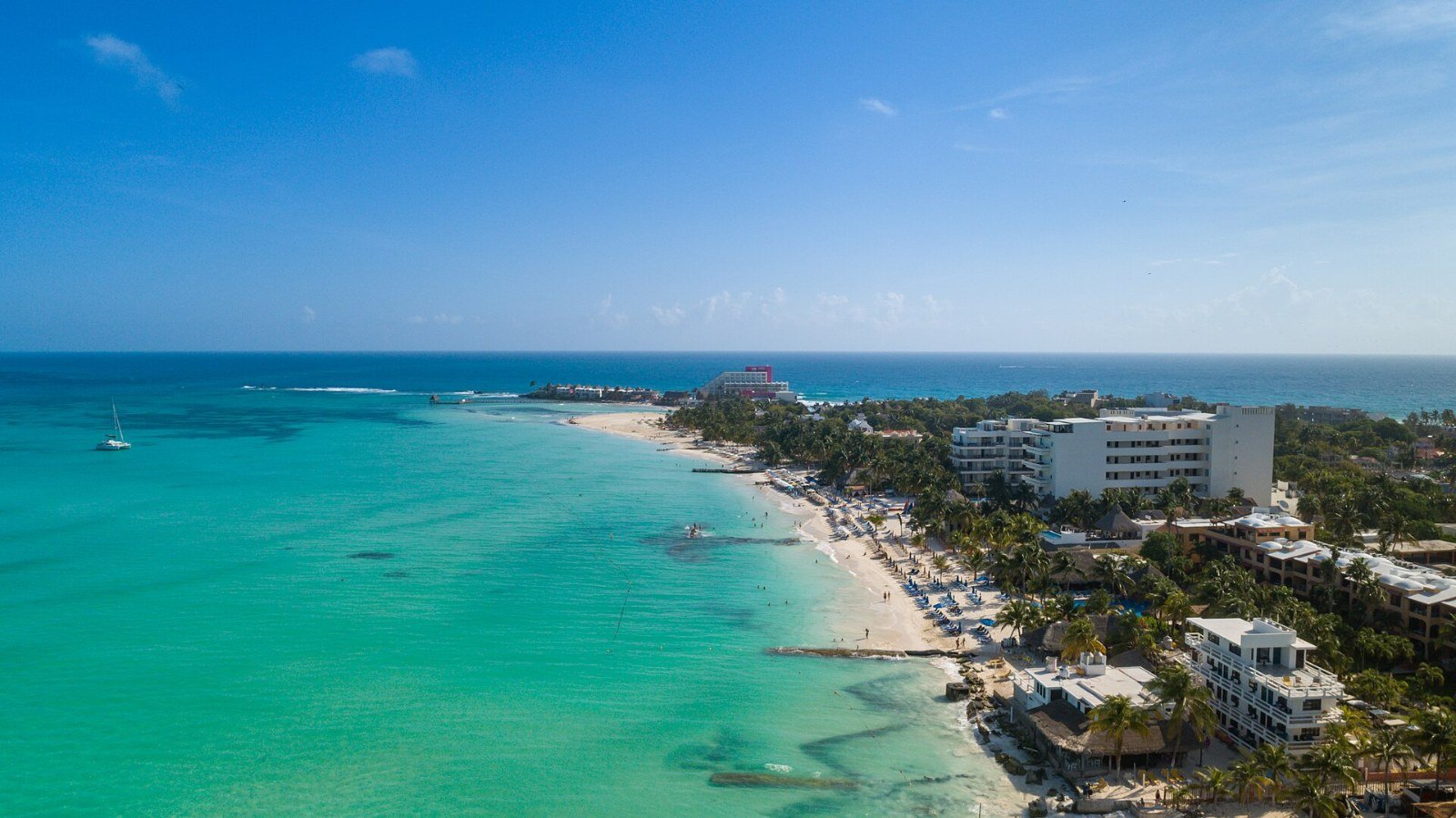
All beaches in Mexico are public, even in front of resorts, though access paths between hotels can be hard to find. Check the beach flags: green means calm, yellow means take care, red and black mean do not swim.
Playa Delfines (about km 18) is the big public beach on the open Caribbean, with a lookout over the sea and almost no buildings behind it. The water is a striking turquoise, but waves and currents can be strong.
Playa Langosta and Playa Tortugas (about km 5 to 6) face the bay toward Isla Mujeres. The water is shallow and calm, which makes them good for families. Playa Tortugas is also one of the piers for the Isla Mujeres ferry.
Playa Gaviota Azul and Playa Chac Mool (about km 9 to 10) sit near Punta Cancun, where the bay meets the open sea, with lively beach bars and water sports.
Playa Marlin and Playa Ballenas (about km 13 to 15) are long, wide stretches in front of the big resorts, good for long walks.
Playa Norte on Isla Mujeres is often called the best beach in the area: soft sand, calm, shallow, glassy water and beautiful sunsets. It is about a 20-minute ferry ride from Cancun.
Things to do
Snorkel the reef and MUSA. The waters off Cancun and Isla Mujeres are part of a marine national park. MUSA, the underwater museum, has hundreds of life-size sculptures on the seabed that coral and fish have slowly taken over. You can see them on a snorkel or dive trip or from a glass-bottom boat.
Visit the ruins in town. El Rey, at about km 18 of the Hotel Zone, is a small Maya site where iguanas sun themselves on the old walls. El Meco, north of downtown, has a temple you can see up close. Both are quiet and take an hour or two.
See the Maya Museum. The Museo Maya de Cancún in the Hotel Zone has a strong collection of objects from sites across the peninsula, and the San Miguelito ruins are on the same grounds.
Get on the lagoon. The Nichupté lagoon behind the Hotel Zone is great for paddleboarding, kayaking and jet-boat tours through the mangroves. Sunset over the lagoon is one of the best views in Cancun.
Try water sports. Parasailing, jet skis, kitesurfing and sailing are all easy to book from the beaches near Punta Cancun. Diving is excellent year-round, and the cenotes offer cave diving for certified divers.
Spend a day at a nature park. Xcaret, Xel-Há and Xplor, south of Cancun on the Riviera Maya, mix snorkelling, underground rivers, ziplines and shows. They are expensive but a full day out, and popular with families.
Nature and day trips
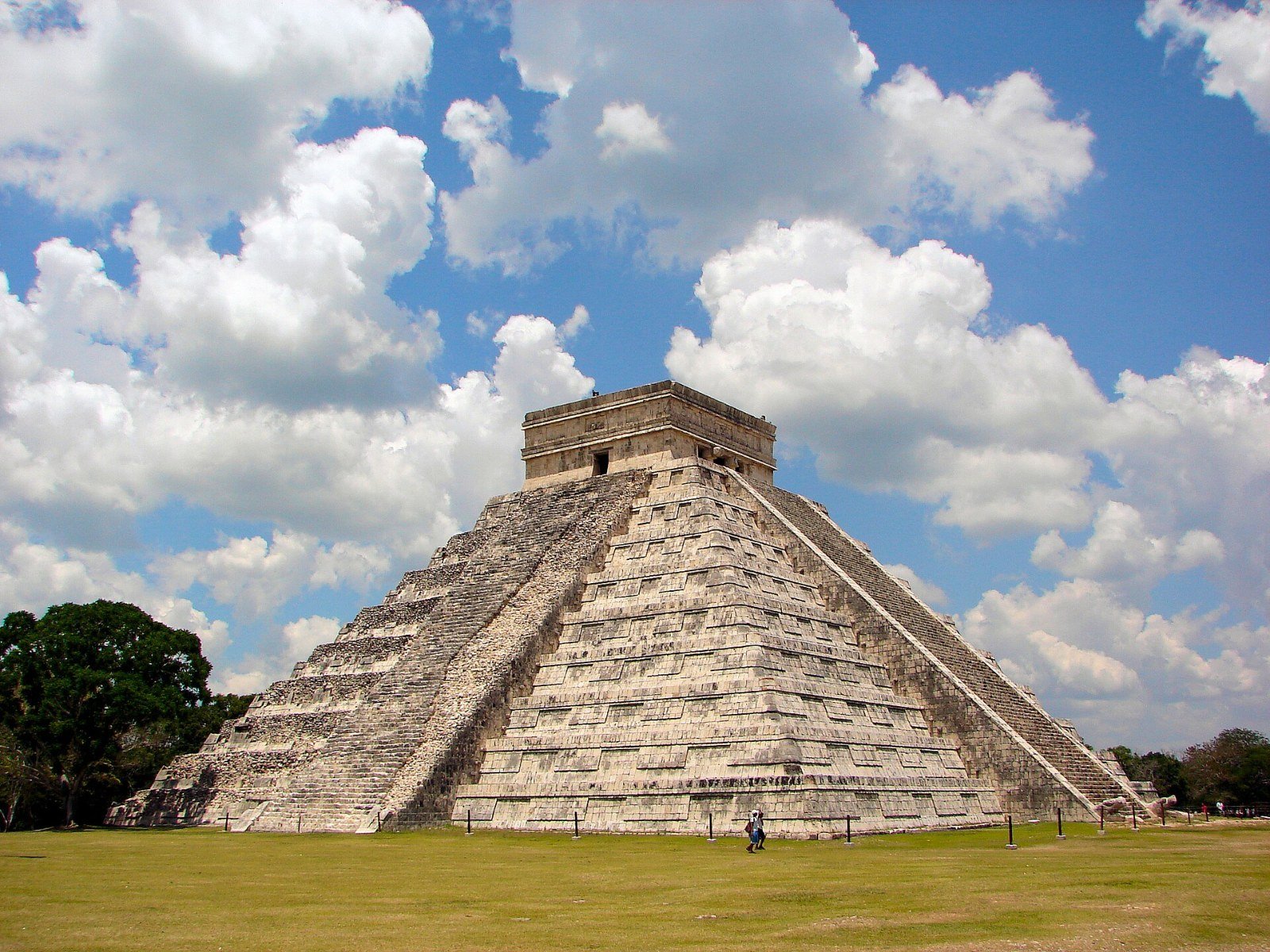
Chichén Itzá, one of the New Seven Wonders of the World, is about 200 km west of Cancun, so plan on roughly two and a half to three hours each way. The great pyramid, El Castillo, is the highlight. Go early to beat the heat and the tour buses, and combine it with a swim in a cenote such as Ik Kil or a stop in the colonial town of Valladolid.
Tulum, about two hours south, has Maya ruins on a cliff above the sea and a beach below them. Pair it with nearby cenotes or the town of Tulum for lunch.

Cenotes are freshwater sinkholes, many of them open to swimmers. The Ruta de los Cenotes inland from Puerto Morelos has several within an hour of Cancun, and there are many more around Valladolid and Tulum. Use biodegradable sunscreen or none at all, and shower before you swim.
Isla Mujeres is the easiest day trip: ferries leave Puerto Juárez and the Hotel Zone piers throughout the day. Rent a golf cart, swim at Playa Norte and ride down to Punta Sur, the cliffs at the island’s southern tip.
Isla Holbox, off the north coast, is a sandy island with no cars and calm, shallow water. It is a long day trip, about two and a half hours by road plus a short ferry, so an overnight stay is better. From about June to September, tours from Holbox and Isla Mujeres go out to swim with whale sharks.
Sian Ka’an Biosphere Reserve, south of Tulum, is a UNESCO World Heritage site of lagoons, mangroves and reef where boat tours spot dolphins, turtles and birds.
Shopping
For crafts and souvenirs, head downtown to Mercado 28, a large market of stalls selling silver, embroidered textiles, hammocks, ceramics and tequila. Bargaining is expected, so start at about two-thirds of the asking price. In the Hotel Zone, La Isla Cancún is an open-air mall on the lagoon with shops, restaurants and an aquarium, and Plaza Kukulcan and Luxury Avenue carry international brands. For good tequila or mezcal, buy from a specialist shop rather than the airport.
Food, nightlife and entertainment
Eat downtown at least once. The Parque de las Palapas square fills with food stalls in the evening, selling marquesitas (crisp rolled crêpes, often filled with cheese), tacos and esquites. Look for Yucatán dishes such as cochinita pibil (slow-roasted pork in achiote), sopa de lima and panuchos, plus fresh ceviche and fish tacos near the coast. Mercado 23 is a no-frills local market with cheap, good food stalls.
The Hotel Zone has the big nightlife, centred on Punta Cancun around km 9. Coco Bongo is the famous show club, with acrobats and live music between DJ sets, and the area around it has large dance clubs that stay open until dawn. For a quieter night, try the restaurants along the lagoon at sunset or the bars and live music downtown along Avenida Tulum and Avenida Yaxchilán.
Annual events
Carnival takes place in the days before Ash Wednesday, which falls on February 10 in 2027. Cancun and Isla Mujeres hold parades, music and street parties; the official programme is usually published a few weeks before.
Spring equinox at Chichén Itzá, around March 20 to 21 each year, draws big crowds to watch the afternoon light form a serpent of shadow on the steps of El Castillo. The same effect appears around the autumn equinox in September.
Spring break brings large numbers of college students to the Hotel Zone, mostly in March. If you want quiet, avoid the Punta Cancun area or those weeks.
Day of the Dead, on November 1 and 2, is marked across Mexico with altars, marigolds and family gatherings. In the Yucatán it is known as Hanal Pixán and comes with its own traditional dishes.
Whale shark season runs from about June to September, when the world’s largest fish gather to feed off Isla Mujeres and Holbox.
3-day and 7-day itineraries
3 days
Day 1, beaches and the lagoon: spend the morning at Playa Delfines or your hotel beach, visit El Rey ruins and the Maya Museum in the afternoon, and watch the sunset over the Nichupté lagoon. Finish with dinner around Punta Cancun.
Day 2, Isla Mujeres: take an early ferry, rent a golf cart and ride to Punta Sur, then swim and stay for sunset at Playa Norte before the ferry back.
Day 3, reef and downtown: book a morning snorkel trip to MUSA or the reef, then take the bus downtown for Mercado 28 and dinner at Parque de las Palapas.
7 days
Days 1 to 3: follow the 3-day plan.
Day 4, Chichén Itzá and Valladolid: leave early, see El Castillo before the crowds, swim in a cenote and have a late lunch in Valladolid.
Day 5, a beach day: rest on the resort or at Playa Langosta. You will need it.
Day 6, Tulum and cenotes: see the clifftop ruins early, swim at a cenote nearby and stop in Playa del Carmen on the way back for a walk along Fifth Avenue.
Day 7, Puerto Morelos: snorkel the reef in the national park, eat fresh fish in the town square and head to the airport, which is only 20 minutes away.
Do’s and don’ts
Do
- Pay the Visitax online before you leave and keep the receipt.
- Carry some pesos for buses, markets, street food and tips.
- Check beach flags and swim only where it is safe.
- Use reef-safe sunscreen, and none in cenotes.
- Book refundable rates and travel insurance for June to November.
- Agree on a taxi fare before you get in.
Don’t
- Drink tap water; use bottled or filtered water.
- Stop for timeshare sales stands at the airport arrivals hall.
- Touch or stand on coral.
- Leave valuables on the beach while you swim.
- Assume every attraction takes cards; smaller places want cash.
Cancun FAQ
When is the best time to visit Cancun?
December to April is the dry season, with sunny days and calm sea. Early December and late January are often the best mix of weather and price. June to November is hurricane season, and sargassum seaweed is usually heaviest from spring to late summer.
Is the Hotel Zone or downtown better to stay in?
The Hotel Zone puts you on the beach and near the nightlife. Downtown is cheaper, with better local food, and buses connect the two day and night.
How do I get from Cancun to Isla Mujeres?
Ferries leave from Puerto Juárez and from piers in the Hotel Zone such as Playa Tortugas. The crossing takes about 15 to 30 minutes, depending on the pier.
Can I visit Chichén Itzá as a day trip from Cancun?
Yes. It is about two and a half to three hours each way by road. Leave early, and add a cenote swim or a stop in Valladolid.
Do I need to pay a tourist tax in Cancun?
Foreign visitors to Quintana Roo must pay the state Visitax fee online before departure. Some hotels also charge a local environmental or lodging fee at check-in.
Is the water in Cancun safe to drink?
No. Drink bottled or filtered water. Hotels and restaurants use purified water and ice.
Planning a trip to Cancun?
We track flight, hotel and package prices and only post deals that beat the usual price. See what’s live right now.
See Cancun deals